Fence Installation in Eau Claire & the Chippewa Valley
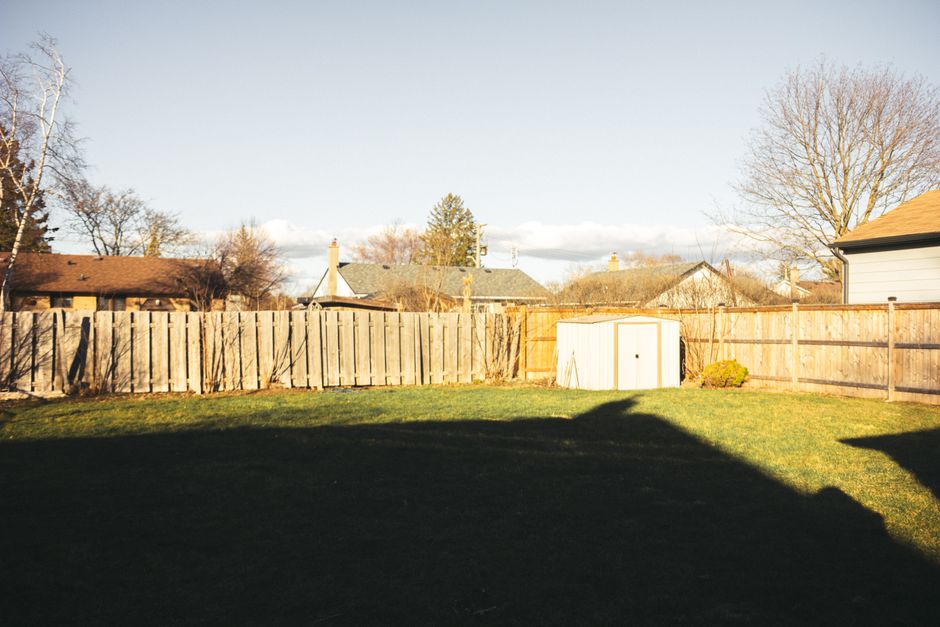
Fence installation in the Chippewa Valley starts with a question most homeowners don't expect: not what material to choose, but which municipal code applies to the lot. Wisconsin has no statewide fence-height, setback, or permit law for residential property — the state's Uniform Dwelling Code, which governs most home construction statewide, never uses the word "fence." Every requirement that actually applies to a fence project here — how tall it can be, how close to the property line it can sit, whether a permit is required at all — comes from the city or village where the property sits, not from the State of Wisconsin.
That makes the rules genuinely local. Eau Claire's ordinance differs from Chippewa Falls', which differs again from Altoona's, Menomonie's, Lake Hallie's, and Fall Creek's. Below is what each of the six Chippewa Valley communities this site serves actually requires, sourced directly from each municipality's code, along with the state-level rules — Diggers Hotline notification and vision-triangle sightlines — that apply everywhere regardless of which town a property is in.
Wisconsin Has No Statewide Fence Law — Every Town Sets Its Own
This is worth stating plainly, because it's easy to assume a state rule exists and simply hasn't been publicized: it doesn't. Search the Uniform Dwelling Code (Wis. Admin. Code SPS 320–325) — the construction standards Wisconsin applies to one- and two-family dwellings statewide — and "fence" does not appear anywhere in it. Height limits, setback distances, permit thresholds, and materials restrictions for a residential fence are entirely a local zoning matter, decided ordinance by ordinance in each city and village.
Wisconsin is also performance-only when it comes to the fence installation trade itself: there is no state contractor license specific to installing fences, the way there is for some other regulated trades. What governs a fence project here is the municipal code covered below, plus a small number of statewide statutes on excavation notice and boundary disputes covered further down this page. Confirm requirements against the applicable municipality's own code before finalizing plans — the citations below link directly to each one.
Permit, Height, and Setback Rules by Municipality
All six communities in this service area have published specific, current figures. For a plain-language rundown of who needs a permit and who doesn't, see Do I Need a Permit to Install a Fence in the Chippewa Valley?
Eau Claire
Eau Claire's Land Development Ordinance requires a permit for any fence that is both 10 feet or longer and more than 30 inches tall — both conditions have to be met before a permit is triggered — and for any retaining wall or wall system taller than 30 inches (Eau Claire LDO §17.04.01(B)(1)). The ordinance sets maximum height by yard and district (§17.04.01(B)(3)):
| Location | Maximum height |
|---|---|
| Front yard, residential districts | 4 ft |
| Interior side yard | 6 ft |
| Street-side yard or rear yard | 6 ft (up to 8 ft if set back 5 ft from an arterial street, with shrubs planted every 4 ft — this exception applies only to street-side and rear yards, not the front or interior side yard) |
| Urban and downtown districts | Front and street-side fences prohibited outright |
A fence can generally sit anywhere on or within the property line except inside a vision triangle, a stormwater easement, or a right-of-way without the easement holder's written permission (§17.04.01(B)(2)). On materials (§17.04.01(B)(4)): masonry, stone, metal, and wood are allowed everywhere; chain link with slats and barbed wire are limited to industrial districts and require approval; above-ground electrified fencing isn't permitted anywhere in the city. Eau Claire's current Land Development Ordinance took effect October 1, 2025 — a figure that doesn't match the table above has likely been superseded. For the full per-district breakdown, see How Tall Can My Fence Be?
Chippewa Falls
Chippewa Falls requires a fence permit with a $40 fee (Chippewa Falls Zoning Code §17.08(11)). Fences are generally allowed up to 6 feet, but the first 5 feet of lot closest to a public right-of-way is capped at 4 feet, and anything inside the vision triangle is capped at 2 feet above street-center elevation.
Altoona
Altoona's municipal code allows residential fences up to 8 feet, but front and street-side yards are capped at 3 feet and must be at least 50% open — solid privacy fencing isn't allowed facing the street (Altoona Municipal Code §19.56.070(C)). Screening fences up to 8 feet are allowed in interior side and rear yards. A permit and fee are required, the finished side of the fence must face outward toward neighboring property or the street, and barbed wire is prohibited everywhere in the city.
Menomonie
Menomonie's code sets a 4-foot maximum in the front yard, with a minimum 3-foot setback off the front or street-side property line and a 2.5-foot cap inside the vision triangle (Menomonie City Code §10-4-5(F)(6)). Rear and non-street side yards allow up to 6 feet generally, dropping to 4 feet within 10 feet of the building setback line. A fence on a boundary between a residential and a nonresidential property can go up to 8 feet.
Lake Hallie
Lake Hallie's zoning ordinance caps fences in residential districts at 6 feet on side and rear yards (6'4" measured from original grade) and 48 inches in the front yard (52" from original grade) (Village of Lake Hallie Title 14 Zoning Ordinance §70-107(g)(4)). A front-yard fence can exceed 48 inches, up to 6 feet, only for an in-ground patio fence that meets all of: no more than 40 linear feet, outside the vision triangle, set back at least 20 feet from the road right-of-way, and no roof or canopy. Barbed wire is prohibited in residential districts. Fences in the agricultural district follow Wisconsin's partition-fence statute (§70-107(g)(3)), covered further down this page.
Fall Creek
Fall Creek's fence permit ($25 fee) caps front-yard and street-adjacent fences at 4 feet, with a 2-foot-6-inch cap inside the vision triangle (Village of Fall Creek Fence Permit). Side and rear yards allow up to 6 feet, but a fence can't extend toward an adjacent street any further than the house's own setback line. The finished side of the fence has to face the neighboring property, with posts on the interior side.
Corner Lots and Vision-Triangle Setbacks
Every one of the six communities restricts what can go inside a vision triangle — the sightline area at a street corner or driveway that has to stay clear so drivers can see cross traffic and pedestrians. Eau Claire's version is the most fully documented: nothing over 3 feet tall is allowed within 10 feet of a driveway, 20 feet of an alley or local street, or 40 feet of a collector or arterial street, measured back of curb (§17.04.06). Chippewa Falls caps vision-triangle height at 2 feet above street-center elevation; Menomonie caps it at 2.5 feet. A lot that touches two streets, an alley, or a shared driveway should plan on a lower fence height along that corner regardless of what the rest of the yard allows. See Corner-Lot and Vision-Triangle Rules for Fences for a closer look at how this plays out on an actual lot.
Call Diggers Hotline Before Any Post Hole Goes In
Regardless of municipality, Wisconsin state law requires notifying the state's one-call system — Diggers Hotline — at least 3 working days before any excavation (Wis. Stat. § 182.0175(2)(am)1.). "Excavation" is defined broadly enough to include digging or augering fence-post holes, so this applies to a small residential fence project the same way it applies to a large excavation job. Once utility lines are marked, state law also sets an 18-inch minimum clearance from any marked line (§ 182.0175(2)(as)1.). Skipping this step risks hitting a buried gas, electric, water, or communications line — a real safety and cost risk, not a formality. See Do You Have to Call Diggers Hotline Before Installing Fence Posts? for how the notification process works.
Confirm the Property Line Before Building
A permit says what a municipality allows; it doesn't say exactly where a property line sits. Surveyed pins, recorded plats, and old fence lines don't always agree, and building on what turns out to be a neighbor's property — even by a few inches — is the kind of dispute that's far cheaper to avoid than to resolve after a fence is in the ground. Confirming the line before any post goes in, and accounting for any recorded easement, is a planning step, not a legal opinion — anything genuinely in question is a conversation for a surveyor or the municipality's zoning office. See Where Can I Put My Fence? Property Lines, Easements & Setbacks for more on how this works in practice.
Two Wisconsin statutes are worth knowing for a fence on a shared line. Where the properties on both sides are used for farming or grazing, Wis. Stat. § 90.03 requires the fence to be maintained in equal shares by both occupants, and a "legal fence" under § 90.02(3) has to be at least 50 inches tall with no more than a 4-inch gap at the bottom. Separately, on the neighbor-dispute side, Wis. Stat. § 844.10 treats a fence built maliciously and unnecessarily over 6 feet tall, purely to annoy a neighbor, as a private nuisance — that's a nuisance trigger tied to intent, not a general height cap on fences.
What a Fence Installation Project Actually Involves
Every fence project moves through the same broad stages regardless of material: confirming the property line and any easements, checking the applicable municipal permit and height rules above, notifying Diggers Hotline, laying out the fence line and gate locations, setting posts, and installing the panels, rails, or infill between them. How long that takes depends heavily on linear footage, terrain, and how many gates are involved — see How Long Does Fence Installation Take? for what typically affects the timeline.
Timing matters too. Wisconsin's frost depth makes late fall and winter a harder window for setting posts, since footings generally need to sit below the frost line to stay stable through freeze-thaw cycles. Best Time of Year to Install a Fence in Wisconsin covers how the ground-freeze cycle affects scheduling in more detail.
Setting posts correctly — depth, footing, spacing — is also the part of the project with the least room for error, since a fence is only as stable as what's below ground. That's a reason to have this work handled by someone experienced with local soil and frost conditions rather than treating it as a weekend project.
Working With a Fence Installer
Because permit rules, materials, and site conditions vary block by block across the Chippewa Valley, most homeowners get more reliable results working with an installer familiar with local codes than trying to research every municipal requirement from scratch. What to Know Before Hiring a Fence Installer covers questions worth asking before signing anything.
Request a quote through this page or call (914) 530-6133, and we'll pass along the project details — location, approximate linear footage, and the fence type under consideration — to a fence installer serving that part of the Chippewa Valley.
Choosing a Fence Material or Style
Material choice affects cost, maintenance, and which of the height and setback rules above end up mattering most for a given project.
- Wood fence installation — the traditional choice for privacy fencing, with a range of styles and a maintenance schedule to plan around.
- Vinyl fence installation — a low-maintenance alternative to wood, available in comparable privacy and picket styles.
- Chain link fence installation — a budget-conscious option for yards, dog containment, and rental properties.
- Aluminum fence installation — an ornamental, low-maintenance option often used around pools and front yards.
- Fence gates — single and double drive gates, pedestrian gates, and gate automation, sized to match whichever fence type is chosen.
Each material page covers that material's own height and style options in more depth than the general rules above.
Beyond a New Fence Installation
Not every fence project starts from bare ground. This site also covers:
- Fence repair and fence replacement — for storm damage, rot, lean, or a fence that's simply reached the end of its life. Signs Your Fence Needs Repair vs. Replacement covers how to tell which situation applies.
- Pool fencing — Wisconsin's only state pool-barrier rule applies to public pools, not residential backyard pools, which are governed by local ordinance instead. Does My Pool Need a Fence in Wisconsin? covers what that means for a private pool.
- Farm and agricultural fencing — including the partition-fence rules under Wis. Stat. ch. 90 covered above. Wisconsin's Partition-Fence Law: What Shared-Line Fences Require goes into more detail on shared-line fencing between farm properties.
- Pet fencing — containment-focused fencing sized and styled around keeping dogs and other pets on the property. Best Fence Types for Dogs and Other Pets compares the common options.
- Fence staining and sealing — maintenance for an existing wood fence rather than a new installation.
- Commercial fencing — fencing for business, industrial, and commercial properties, which follows separate zoning-district rules from residential fencing.
What Fence Installation Costs
Cost depends on material, total linear footage, number and type of gates, terrain and excavation difficulty, whether an old fence needs to be removed first, and permit fees. Fence Installation Cost in the Chippewa Valley breaks down each of those cost drivers in detail.
Fence Installation Across the Chippewa Valley
The permit and height rules above apply specifically to Eau Claire, Chippewa Falls, Altoona, Menomonie, Lake Hallie, and Fall Creek. See Service Areas for town-specific pages covering each community in more detail.
Ready to move forward? Request a quote or call (914) 530-6133 — share the fence type, approximate linear footage, and municipality, and the rules above already indicate which permit and height limits apply.