Wisconsin's Partition-Fence Law: What Shared-Line Fences Require
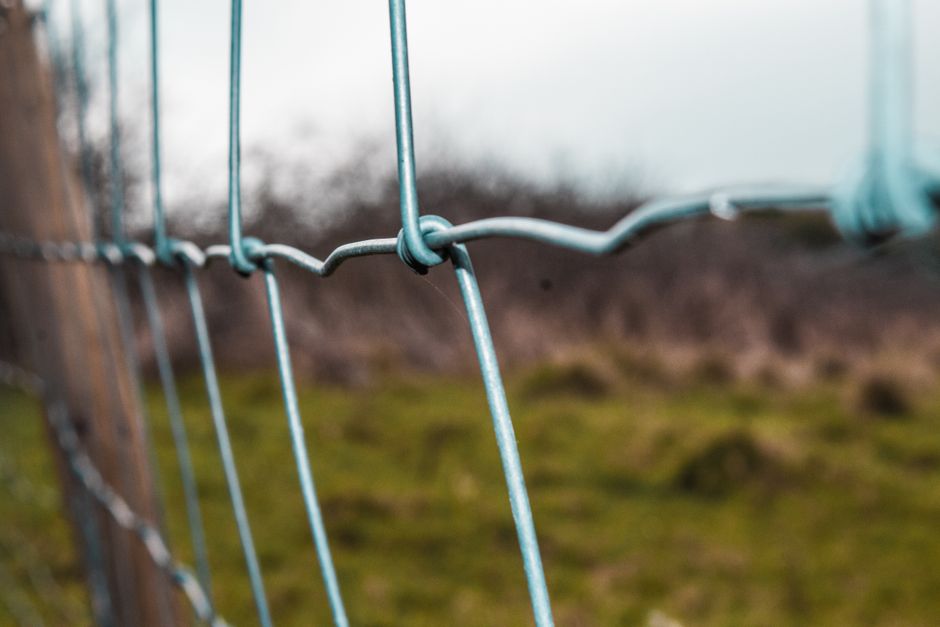
Most fence disputes between neighbors in a residential setting come down to zoning rules — height, setback, and placement, all covered elsewhere on this site. There's a separate, older body of Wisconsin law that applies specifically to fences on a shared boundary between rural, farm, or grazing properties: the partition-fence statutes in Wisconsin Statutes Chapter 90. This page covers what that law actually requires, and where it does and doesn't apply.
For code requirements that apply to fence installation generally across the Chippewa Valley, see fence installation.
What a partition fence is
A partition fence is a fence built on the line between two adjoining properties, shared by both owners rather than sitting entirely on one side. Wisconsin's partition-fence statutes address a specific question: when two adjoining owners both benefit from a fence on their shared line, who is responsible for building and maintaining it?
When the cost-sharing rule applies
Wis. Stat. § 90.03 requires that a fence on a shared line be split in equal shares between the adjoining owners — but only where farming or grazing land is involved. This is not a general rule that applies to every residential lot line in the Chippewa Valley. A fence between two ordinary residential backyards in Eau Claire or Altoona isn't automatically subject to this statute; it's aimed at the rural, agricultural context where a shared fence keeps livestock contained or separates working farmland.
What counts as a "legal fence" under the statute
Wis. Stat. § 90.02(3) sets a minimum standard for what counts as a "legal fence" under this chapter: it must be at least 50 inches tall, with the bottom no more than 4 inches off the ground. A fence that doesn't meet this minimum height-and-ground-clearance standard doesn't qualify as a legal partition fence under the statute, even if it's built on the shared line and even if both neighbors agree to it informally.
Why this matters for a farm or rural property
If a property in the Chippewa Valley borders farmland or is itself used for farming or grazing, the partition-fence statute can determine who pays for a shared-line fence and what minimum standard that fence has to meet, independent of whatever a city's zoning code says about height and placement for ordinary residential fences. These two bodies of law — municipal zoning and the state partition-fence statute — can both apply to the same property depending on what the land is used for and where the fence sits.
This is exactly the kind of question that's easy to get wrong by assuming residential fence rules automatically transfer to a rural or farm boundary, or the reverse — assuming a farm fence rule applies to an ordinary suburban lot line where it doesn't. If there's any doubt about whether a specific shared-line fence falls under Chapter 90, that's worth confirming directly rather than guessing.
Partition fences vs. ordinary boundary fences
It's worth being precise about the terminology, because "boundary fence" and "partition fence" get used interchangeably in everyday conversation but don't always mean the same thing legally. Any fence built on a shared property line is a boundary fence in the general sense. A partition fence, in the specific sense the statute uses, is a boundary fence that falls within Chapter 90's farming-and-grazing scope and therefore triggers the equal-share cost rule and the "legal fence" standard described above. A fence between two suburban backyards is a boundary fence in the everyday sense, but it isn't automatically a "partition fence" for purposes of this statute unless the farming or grazing condition is actually met.
Where the line between residential and agricultural use gets blurry
Not every property near farmland fits neatly into "residential" or "agricultural." A rural residential lot with a horse paddock, a hobby farm with a handful of animals, or a property that borders active cropland but isn't farmed itself can raise a genuine question about whether Chapter 90 applies to a specific shared fence line. This isn't a question this page can answer for a specific property — it depends on how the land is actually used on both sides of the line, not just on how a parcel is zoned. Where the answer isn't obvious, that's a reasonable question to bring to an attorney or, for a use-related question specifically, to a local agricultural extension office, rather than assuming one way or the other.
This doesn't replace a municipality's zoning code
Even where Chapter 90 applies and determines who pays for a shared-line fence, it doesn't override whatever height, setback, or permit requirements the property's municipality has adopted for fences generally. A partition fence built to meet the "legal fence" standard under § 90.02(3) still needs to fit within the local zoning code's height and placement rules where those rules apply to the property. The two bodies of law answer different questions — one is about who pays and what minimum standard qualifies as a shared fence, the other is about what a municipality allows to be built at all — and a fence on a rural property near a Chippewa Valley town can be subject to both at once.
Farm and agricultural fencing
Fences on farm and agricultural properties often have requirements — livestock containment, perimeter fencing for larger acreage, and shared-line cost questions under this statute — that go beyond what a typical residential fence project involves. See farm and agricultural fencing for more on how this applies to rural Chippewa Valley properties specifically.
For the code and permit requirements that apply to residential fence installation across the Chippewa Valley, see fence installation.