Commercial Fencing
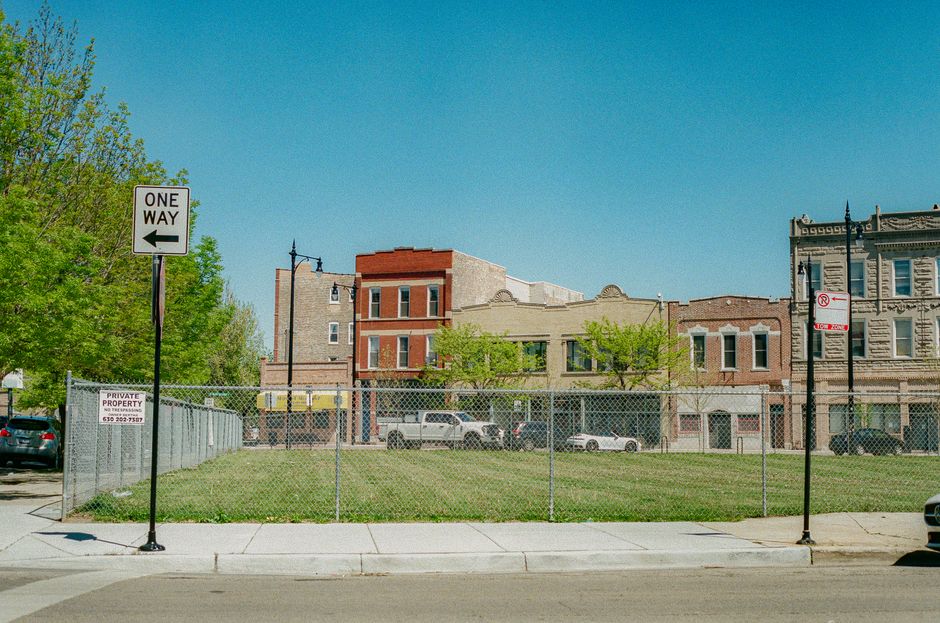
Fencing a commercial or business property is a different job than fencing a house, even when some of the same materials show up on both. A commercial site usually has more than one reason for a fence at once — security, screening, access control — spread across a larger perimeter, and it has to hold up under different traffic and use patterns than a residential backyard ever sees.
What Commercial Fencing Is Used For
Business properties in the Chippewa Valley use fencing for several distinct purposes, often on the same lot:
- Perimeter security around a lot, storage yard, or equipment area, to control access outside business hours.
- Screening for dumpsters, HVAC equipment, loading areas, or outdoor storage that a business would rather not have visible from the street or a neighboring property.
- Access control at vehicle and pedestrian entry points, where a gate does the actual controlling and the fence line simply closes off the rest of the perimeter.
- Boundary definition between a commercial lot and adjoining residential or commercial property, which matters for liability and clarity as much as appearance.
A single property often needs more than one of these at once — a security fence around a storage yard, for instance, paired with a shorter screening fence around a dumpster enclosure near the entrance, in a different material entirely.
Materials for Commercial Properties
- Chain link remains the most common choice for straightforward perimeter security and storage-yard enclosures, largely because it covers long runs efficiently and can be specified in taller heights and heavier gauges than a typical residential installation.
- Chain link with privacy slats adds a screening function to the same basic fence, which is a common way to hide a storage or loading area without switching materials entirely.
- Ornamental aluminum shows up on the customer-facing side of a commercial property — outside a storefront, along a parking lot frontage, or around a landscaped area — where appearance matters as much as containment.
- Wood appears less often on commercial sites than residential ones, but it still gets used for targeted screening jobs, like enclosing a dumpster pad, where a solid appearance matters more than long-run economy.
Scale and Access Considerations
Commercial fencing projects tend to involve longer runs, larger and heavier gates, and more entry points than a residential job — a delivery gate wide enough for a truck, a separate pedestrian gate, and sometimes a keyed or coded access point are all common on a single property. Planning those access points around how the business actually operates, including delivery schedules and emergency-vehicle access where that applies, is worth working through with whoever quotes the job before materials are ordered.
Working Around Business Operations
Fencing work on an active commercial property has to fit around the business itself — customer traffic, delivery schedules, and hours of operation all affect how a job gets sequenced. A retail property might need work staged around store hours, while a warehouse or storage yard might need a section of perimeter left open for deliveries until the very end of the project. Working through that sequencing with whoever quotes the job, before materials are ordered, keeps the fence installation from creating its own disruption to the business it's meant to secure.
Ongoing Repair and Upkeep
Commercial fencing sees more traffic and more incidental impact than a residential fence typically does — delivery vehicles, forklifts, and general equipment movement near a perimeter fence all add wear that a quiet residential yard doesn't see. A damaged section of commercial fence, whether from vehicle contact or ordinary wear on a heavily used gate, is worth addressing promptly, since a gap in a security or screening fence defeats the purpose it was installed for in the first place.
Permits Still Apply
A commercial fence is still subject to the same general permit, height, and setback framework covered on the fence installation page, even though commercial zoning districts sometimes carry different specifics than residential districts in the same municipality. That page covers permit thresholds by municipality across the Chippewa Valley; a commercial property owner should confirm the applicable district and any commercial-specific provisions with the municipality directly, since zoning code for commercial and industrial districts is not always identical to the residential rules.
Coordinating with Property Management
Commercial fencing decisions often involve more than one party — a property owner, a property management company, and sometimes a tenant with its own preferences about screening or security. Sorting out who's making the call on material, height, and gate placement before quoting starts avoids the back-and-forth that otherwise slows a commercial project down partway through. It's also worth confirming early whether the fence needs to match an existing look elsewhere on a multi-building property, since a mismatched fence style between phases of the same development stands out in a way a single-property residential fence never has to account for.
Requesting a Quote
Submitting the quote form connects you with a local fence contractor experienced in commercial-scale fencing projects, who can assess the property's security, screening, and access needs before quoting the work. This site serves commercial and business properties across the Chippewa Valley service area, including Eau Claire, Chippewa Falls, Altoona, Lake Hallie, Fall Creek, and Menomonie. Call (914) 530-6133 or visit the contact page to request a quote.