Fence Installation in Chippewa Falls
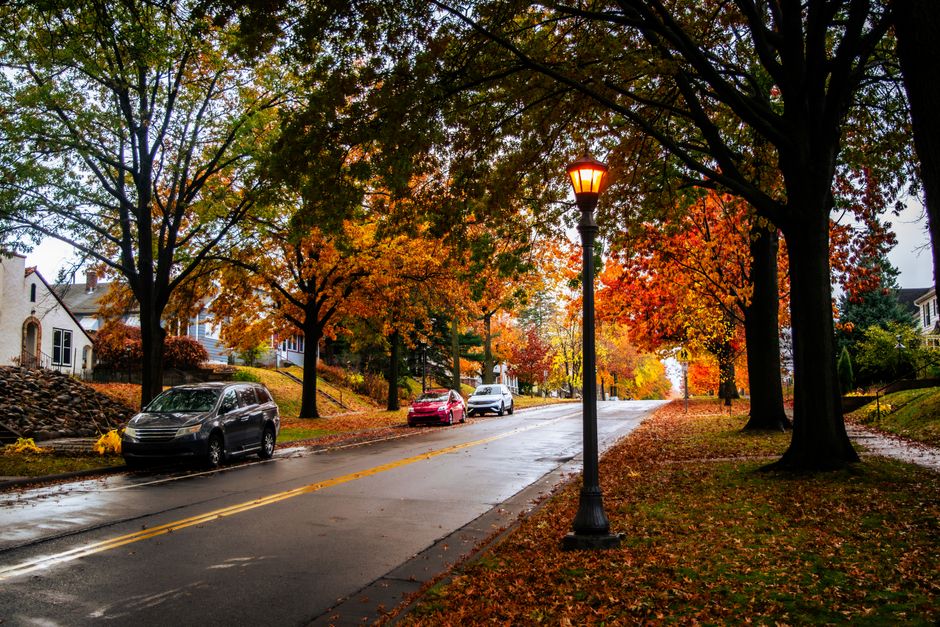
Chippewa Falls is the Chippewa County seat, with a 2020 census population of 14,731, built up along the Chippewa River and Duncan Creek, which cuts through the downtown area before joining the river. The city's older residential blocks near downtown and along the river sit on smaller, established lots, while more recently developed neighborhoods on the city's north and east sides tend to have larger, more uniform lots typical of newer subdivisions. That split shows up in fencing demand: older neighborhoods generate more repair and replacement calls on fences that have been in the ground for decades, while newer subdivisions generate more first-time installation calls tied to a new home, a new dog, or a yard that's finally being landscaped.
Chippewa Falls also has a fair number of corner lots and lots that back onto alleys, both of which come with their own layout considerations once a fence project involves a right-of-way or a street-facing side yard. Homeowners near the river and Duncan Creek corridor sometimes deal with sloped or uneven ground, which affects how a fence line is planned and where posts can go. Across the city, the two most common reasons a fence project comes up are the same as most of the region: containing a pet, and defining a property line between two homes that are close enough together that an informal boundary isn't good enough anymore.
The city's historic core — the blocks around Bridge Street and the downtown business district near the dam — sits on some of the oldest platted lots in the Chippewa Valley, and fences on those lots often need to work around mature trees, narrow side yards, and existing outbuildings that predate current setback rules. Move out toward the newer residential development on the city's north and east sides, and the picture changes to wider lots, straighter boundary lines, and fewer of the odd angles and easements that show up closer to downtown. Chippewa Falls also has a meaningful amount of multi-generational housing turnover — homes that have stayed in the same family for decades and are only now being renovated or resold — and a fence project is often one of several updates a new owner takes on at once, alongside things like a deck or updated landscaping.
Permits, Height, and Setback Rules in Chippewa Falls
Chippewa Falls requires a fence permit for residential fence projects, with a $40 permit fee, under the city's Zoning Code §17.08(11). The general height limit for a residential fence is 6 feet. That limit drops to 4 feet for the first 5 feet of the lot nearest the right-of-way — in practice, that means a fence closer to the street or alley line has a lower height cap than one set further back on the lot, even within the same yard.
Vision-triangle rules also apply at corners and driveways: under the same section of the code, fencing within the vision triangle is capped at 2 feet above the street-center elevation, which keeps sightlines open for traffic and pedestrians near intersections. That's a common consideration on the city's many corner lots, and it's worth checking before finalizing a fence layout on a corner property.
The full requirement is set out in the City of Chippewa Falls Zoning Code, Chapter 17.08(11); the city's own summary of the fence rule is available directly: City of Chippewa Falls fence requirements.
Chippewa Falls also has a number of lots that sit near the Chippewa River's floodplain, particularly closer to the dam and the older mill-era buildings downtown. A fence on one of those lots may run into additional review beyond the standard zoning code, since floodplain-adjacent construction can carry its own rules on top of the general fence permit — another reason it's worth having a local contractor confirm the specifics for a given address rather than assuming the citywide figures cover every lot equally. Away from the river, the city's residential streets are fairly evenly split between older single-story homes with detached garages set back from the main house — which sometimes affects where a side-yard fence gate needs to go — and more recent two-story construction with attached garages and simpler, more open backyard layouts.
That reduced-height zone near the right-of-way is easy to miss when planning a fence from a tape measure and a rough sense of the lot line, since it only affects the first 5 feet of the lot and doesn't apply to the rest of the same fence run. A fence that's fine at 6 feet for most of its length can still need to step down to 4 feet for a short stretch near the street or alley, which is the kind of detail worth confirming before materials are ordered rather than after.
Requesting a Quote
Submitting the quote form connects you with a local fence contractor who can confirm the permit and fee, check where the reduced-height zone near the right-of-way applies to your lot, and quote the project. Call (914) 530-6133 to reach someone directly, or use the quote form to describe your project and get started.