Farm and Agricultural Fencing
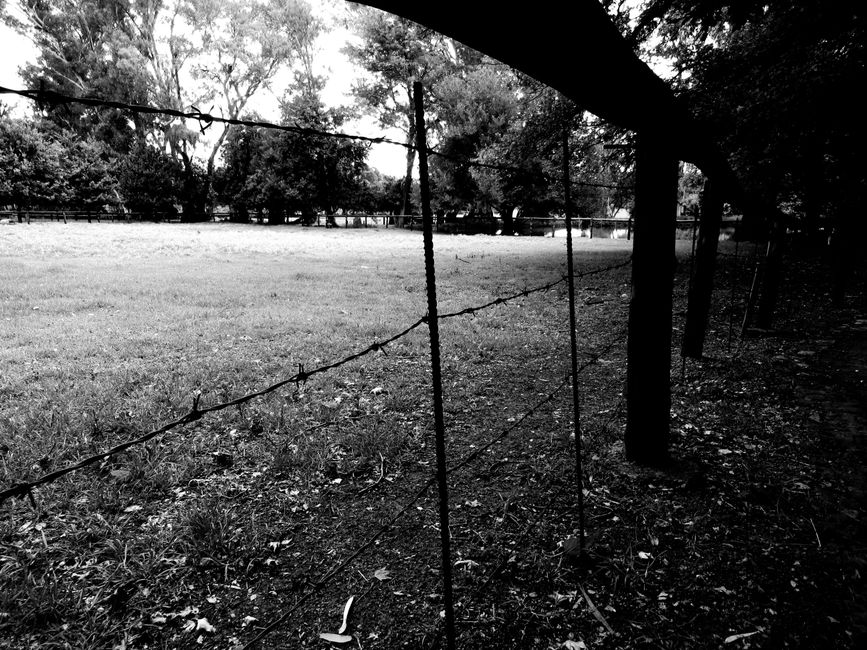
Farm and agricultural fencing covers a different set of needs than a residential yard fence: containing livestock, marking a working boundary between fields, and standing up to years of weather and animal pressure with minimal upkeep. It's also one of the few areas of fencing in Wisconsin where state law, not just local zoning, has something specific to say.
Wisconsin's Partition Fence Law
Most residential fence rules in this state are set entirely by city or village code, but shared farmland boundaries are different. Wis. Stat. § 90.03 requires that a partition fence — a fence on the shared line between two adjoining properties — be kept and maintained in equal shares by the occupants on either side, but only where the adjoining land is used and occupied for farming or grazing purposes. That equal-share obligation doesn't apply to an ordinary residential boundary between two houses in town; it's specific to land actually being farmed or grazed.
The same chapter defines what counts as a "legal fence" for these purposes. Wis. Stat. § 90.02(3) sets the standard: a legal fence must be at least 50 inches tall, with its lowest wire or rail no more than 4 inches off the ground. Those two figures — 50 inches minimum height, 4 inches maximum gap at the bottom — are the only dimensions the statute sets, and they exist to keep livestock in rather than to regulate appearance or privacy the way a municipal height rule would. Wisconsin's partition-fence law: what shared-line fences require walks through how this shared-maintenance obligation plays out between neighboring landowners in more detail.
Common Farm Fence Types
Different farm fencing materials suit different jobs, and most working properties in this region end up with more than one type depending on what's being contained and where:
- Woven wire is the traditional choice for general livestock containment — sheep, goats, and mixed herds in particular — because the close mesh pattern keeps smaller or younger animals from pushing through or getting a head caught between wires.
- High-tensile smooth or barbed wire covers longer perimeter runs economically, particularly for cattle, and holds tension well over rolling or uneven pasture ground.
- Electric fencing, whether as a standalone line or as a training wire added to an existing fence, is common for rotational grazing setups where the boundary needs to move periodically rather than stay fixed.
- Wood board (post-and-rail) fencing shows up most often for horse pasture and near a farmhouse or barnyard, where visibility and a lower risk of injury from contact matter more than raw containment strength.
The right choice depends on the animals being contained, the terrain, and how permanent the boundary needs to be — a rotational grazing paddock and a decades-long property-line fence call for different materials even on the same farm.
Terrain, Access, and Ongoing Upkeep
Rural and agricultural properties often present terrain that a residential yard never does — rolling or uneven pasture ground, wooded stretches along a property line, low or wet areas that flood seasonally, and long runs where equipment access for both installation and later repair has to be planned in from the start. A fence line that looks straightforward on a plat map can turn out to need extra bracing on a slope, additional corner posts where the line changes direction across a field, or a different material entirely where it crosses consistently wet ground.
Farm fencing also takes more sustained pressure over its life than a residential fence does — livestock leaning on wire, wildlife pushing through at known crossing points, and heavier snow load accumulating along a fence line that runs the length of an open field. Walking the fence line periodically, especially after a hard winter or a season of heavy grazing pressure, is the most reliable way to catch a leaning post or a loosened wire section before it turns into an actual gap an animal can get through. A partition fence in particular is worth checking on a schedule with your neighbor, since both sides of the line share responsibility for keeping it in good repair under the statute above.
Boundary and Placement Considerations
A partition fence sits on the property line itself by definition, which makes an accurate survey worth confirming before any new fence goes in, particularly on larger rural parcels where the original section lines may be harder to locate on the ground than in town. Beyond the shared-line rules above, agricultural fencing on a given property can also intersect with the same general permit questions covered on the fence installation page — worth checking with your municipality if the fence sits close enough to a road or a residential structure on the property to fall under local zoning as well as the state's farm-fence statute.
Requesting a Quote
Submitting the quote form connects you with a local fence contractor experienced in farm and agricultural fencing, who can assess the property, the terrain, and what's being contained before quoting the work. This site serves the Chippewa Valley service area, including Eau Claire, Chippewa Falls, Altoona, Lake Hallie, Fall Creek, and Menomonie. Call (914) 530-6133 or visit the contact page to request a quote.