Fence Installation in Menomonie
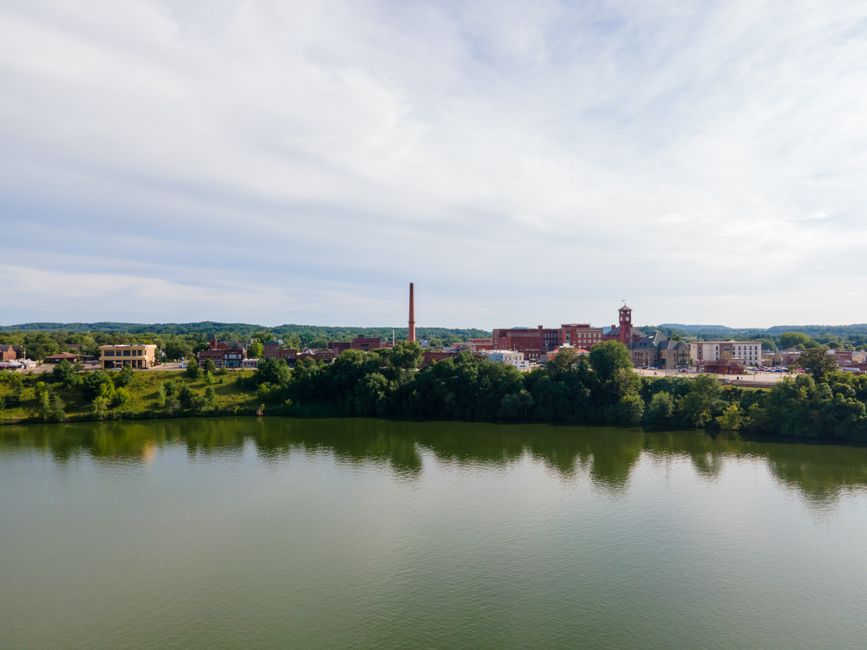
Menomonie is the Dunn County seat and had a 2020 census population of 16,843, built along the Red Cedar River and Lake Menomin, the dam-formed lake that runs through the middle of the city. It's a college town — home to UW-Stout — which means a meaningful share of the housing stock near campus is rental property with smaller lots and tighter setbacks, while the city's outer neighborhoods on higher ground away from the river valley look more like typical single-family subdivisions with larger yards.
That split shapes what fence projects look like in Menomonie. Rental properties near downtown and campus tend to need lower-maintenance, durable fencing — chain link or vinyl — more often than higher-upkeep wood, since landlords are usually the ones paying for it and tenants aren't around for the long haul. Owner-occupied homes on the city's outer edges see more of the pet-containment and privacy-driven projects typical of single-family neighborhoods elsewhere in the valley. Menomonie's hillier terrain around the Red Cedar valley also means grade changes come up more often here than in flatter parts of the Chippewa Valley, which can affect how a fence line is laid out on a sloped lot.
Menomonie's historic downtown, built around the lumber industry that founded the city, sits close to Lake Menomin and carries some of the oldest, smallest lots in the region — comparable in scale to the older blocks in Chippewa Falls or Eau Claire's Third Ward. Wakanda Park and the residential streets around it add another layer of variety, with mid-century homes on modest lots that tend to need fence replacement work as often as new installation. Further out from the lake and the historic core, newer development on higher ground has more of the wide, straight-lined lots typical of recent subdivisions elsewhere in the valley, where a full perimeter fence installed alongside a new build is common.
Permits, Height, and Setback Rules in Menomonie
Menomonie's fence rules are set out in City Code §10-4-5(F)(6). Front-yard fences are limited to 4 feet, and have to sit at least 3 feet off the front or street-side property line — a fence can't be built directly on that line. Within the vision triangle at corners and driveways, the height cap drops further, to 2.5 feet, to keep sightlines open.
Rear and non-street side yards allow a taller fence, up to 6 feet, though that maximum drops to 4 feet if the fence falls within 10 feet of the building setback line on that side of the lot. Where a residential lot borders a nonresidential use — a commercial property or an institutional use like a school — fencing on that shared line is allowed up to 8 feet, reflecting the extra screening those boundaries often call for.
That reduced 4-foot zone within 10 feet of the setback line is easy to overlook, since it applies inside what most homeowners would otherwise think of as a straightforward 6-foot rear yard. It typically comes into play on smaller or oddly shaped lots, where the building setback line sits closer to the actual property line than it would on a larger, more regularly shaped lot — which describes a fair number of the older platted lots near Menomonie's historic core.
The full section is maintained by the city's code publisher: Menomonie City Code §10-4-5, Front, Side and Rear Yard Regulations.
Menomonie's identity as a college town shows up in another practical way: seasonal turnover. A meaningful share of the rental housing near campus changes hands every year around the academic calendar, and fencing on those properties often gets scheduled to work around move-in and move-out dates rather than around the weather the way an owner-occupied project typically does. Owner-occupied neighborhoods further from campus don't have that constraint, and tend to plan fence projects more like the rest of the Chippewa Valley — around spring thaw and before the ground freezes again in fall.
Of the four Chippewa Valley towns with confirmed height figures, Menomonie is the only one with a rule tied to a residential/nonresidential boundary rather than just a yard type — a detail that matters for the homes near the city's commercial corridors and near the UW-Stout campus edge, where a residential lot can sit directly against a nonresidential use. Confirming which side of that boundary a given property falls on is worth doing before assuming the standard 6-foot rear-yard limit applies.
Requesting a Quote
Submitting the quote form connects you with a local fence contractor who can confirm which height limit applies to your yard, factor in any grade changes on the lot, and quote the project. Because Menomonie's rules distinguish between front, rear, and boundary situations more specifically than some neighboring towns, it's worth having someone familiar with the local code walk the property before finalizing a layout. Call (914) 530-6133 to reach someone directly, or use the quote form to describe your project and get started.