Corner-Lot and Vision Triangle Rules for Fences
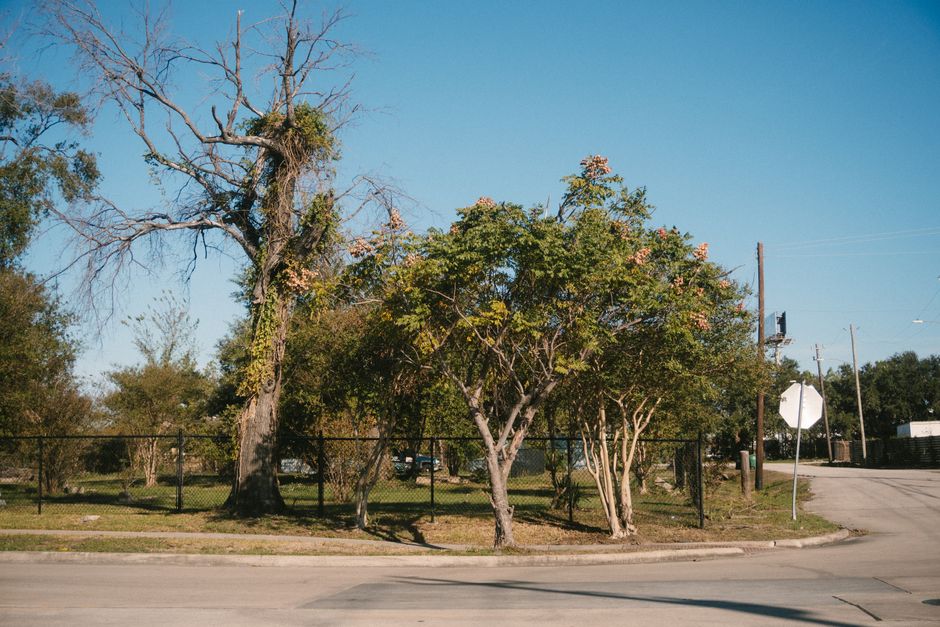
A vision triangle (sometimes called a clear-sight triangle) is a zoning concept aimed at one thing: making sure drivers, cyclists, and pedestrians can actually see each other near an intersection or driveway. Fences, hedges, retaining walls, and even parked vehicles can create a blind corner if they're tall enough and close enough to where two paths of travel meet — and because a fence is a permanent structure, it's one of the first things a city's vision-triangle rule targets. Corner lots and lots next to a driveway or alley are the properties most affected.
Eau Claire's vision-triangle rule, in detail
Eau Claire's ordinance sets a firm cap: nothing over 3 feet tall is allowed inside the vision triangle, regardless of the height that would otherwise be permitted for that yard. The size of the triangle itself — how far back from the intersection the restriction extends — depends on what kind of intersection it is:
| Intersection type | Vision-triangle distance (back of curb) |
|---|---|
| Driveway | 10 ft |
| Alley or local street | 20 ft |
| Collector or arterial street | 40 ft |
This comes from Eau Claire LDO §17.04.06. Notice that the distance scales with how much traffic the intersection carries: a driveway gets the smallest triangle, a busy collector or arterial street gets the largest, because the sight-distance problem is more dangerous where vehicles are moving faster and more frequently.
In practice, this means a fence that would otherwise be allowed up to 6 or 8 feet tall on a given lot still has to drop to 3 feet or less anywhere it falls inside one of these triangles — the vision-triangle cap overrides the yard's normal height allowance, it doesn't get averaged with it or ignored because the rest of the fence is taller.
Why this matters most on corner lots
A corner lot effectively has two street-facing sides instead of one, which means it can have vision triangles on two intersections at once (or a driveway triangle plus a street triangle) rather than the single triangle an interior lot might need to account for near its driveway. That makes the design of a corner-lot fence meaningfully more constrained than a similar fence on an interior lot: the 3-foot cap can apply to a visible chunk of the yard closest to the street, even if the property owner would prefer full-height privacy fencing right up to the corner.
Other towns set their own figures — don't assume Eau Claire's numbers transfer
Eau Claire's specific distances (10/20/40 feet) and its 3-foot cap are Eau Claire's rule, under Eau Claire's own ordinance. Other Chippewa Valley municipalities recognize the same underlying problem — a fence that blocks sightlines near an intersection — but set their own height caps and their own trigger distances, and those numbers are not necessarily the same as Eau Claire's. A vision-triangle height cap that applies in Eau Claire doesn't automatically apply the same way in Chippewa Falls, Altoona, or Menomonie; each of those cities addresses vision triangles in its own zoning code, with its own figures.
If a planned fence sits anywhere near an intersection, a driveway, or an alley — in any of the six Chippewa Valley communities — the vision-triangle rule for that specific town is one of the first things to confirm with the local zoning department, before finalizing height or placement for that section of fence. Treat Eau Claire's numbers above as an illustration of how this kind of rule works, not as a figure to plug into a project in a different town.
It's not just fences
Vision-triangle rules generally target more than fences on their own. Hedges, dense landscaping, retaining walls, parked vehicles, and even oversized signage can create the same blind-corner problem a tall fence does, and a city's ordinance typically addresses the sightline problem as a category rather than singling out fences specifically. That matters for a homeowner planning a corner-lot fence alongside other yard features — a compliant 3-foot fence paired with a row of tall shrubs in the same triangle can still recreate the exact hazard the rule is trying to prevent, even though the fence itself follows the letter of the ordinance.
Older fences and changing rules
A fence that was built before a current vision-triangle rule took effect, or before a nearby intersection saw increased traffic, may not automatically be compliant with today's ordinance just because it's been there a long time. Ordinances can be amended, and what counted as an acceptable sightline years ago isn't necessarily treated the same way today. If a corner-lot fence project involves an existing fence that's being extended, repaired, or replaced, it's worth confirming that the existing layout is still compliant with the current ordinance rather than assuming it's grandfathered in — that assumption isn't something a city's code necessarily supports.
Why sightline problems are dangerous in practice
A blind corner doesn't just make driving less convenient — it removes the seconds a driver, cyclist, or pedestrian would otherwise have to notice each other and react. Near a driveway, that missing reaction time affects a driver backing out and a passing car or a child on a bike. Near a busier collector or arterial intersection, the stakes are higher because vehicles are moving faster and have less room to stop suddenly. That's the underlying safety logic behind scaling the vision-triangle distance to the type of intersection, rather than using one flat distance everywhere.
Putting it together with the rest of the height picture
A vision-triangle rule doesn't replace a town's regular front-yard or street-side height limit — it's an additional, more restrictive cap that applies only within the defined triangle near an intersection or driveway. Everywhere else on the same lot, the normal yard-based height limit still applies. For the full set of permit, height, and code requirements that apply to fence installation across the Chippewa Valley, see fence installation.