Where Can I Put My Fence? Property Lines, Easements & Setbacks
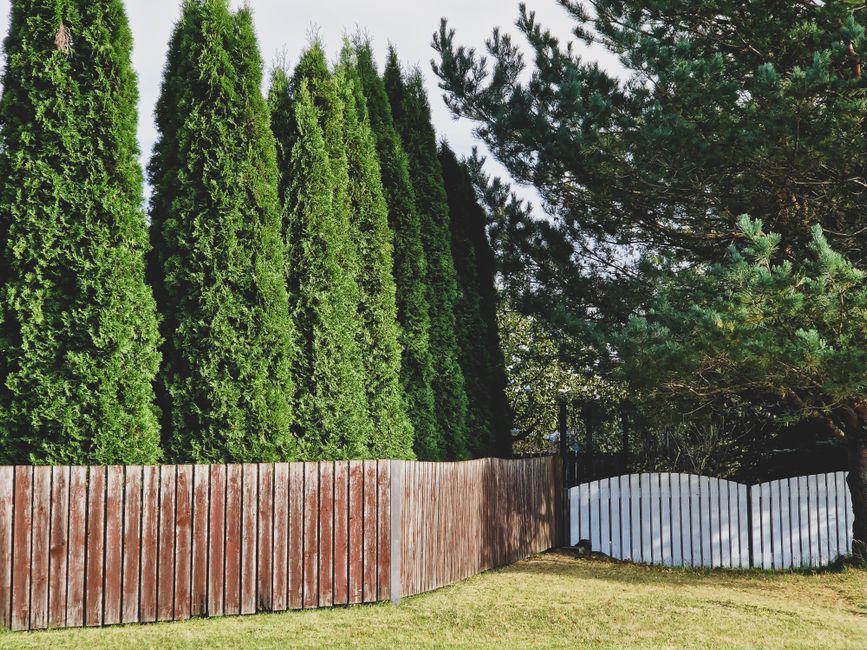
Where a fence can physically go on a property is a separate question from how tall it can be. Height limits are set out by yard type in each city's zoning code; placement runs into a different set of issues — property line accuracy, easements, stormwater infrastructure, and setback distances — and getting placement wrong is one of the most common and most expensive fence mistakes a homeowner can make. This page is general orientation only, not legal advice; a property line dispute, easement question, or boundary survey issue should go to a licensed surveyor or an attorney, not to a search engine.
For the full picture of code requirements that apply to fence installation across the Chippewa Valley — permits, height, and vision triangles together — see fence installation.
Start with your property line, not your fence
The single most common fence dispute has nothing to do with height, materials, or permits — it's a fence built on the wrong side of a property line, sometimes by only a foot or two. Landscaping, an old fence line, or a neighbor's informal description of "where the yard ends" are not reliable ways to locate a boundary. A recorded plat map, a title survey from when the property was purchased, or a new boundary survey from a licensed surveyor are the only ways to know the actual line with confidence. If there's any doubt at all about where the line runs — especially on an older lot, a corner lot, or a lot near a natural feature like a creek or wooded area — resolving that question before placing a single post is worth the cost of a survey many times over.
Setbacks aren't the same everywhere
"Setback" gets used loosely to mean several different things: how far a fence has to sit from the property line itself, how far it has to sit from a right-of-way, and how a height limit changes depending on distance from a street or building line. Eau Claire, Chippewa Falls, Altoona, and Menomonie each define these distances differently, and the applicable number depends on the yard (front, street-side, rear, or interior side) as well as the town. Rather than repeat those figures here, see fence installation for the full per-town breakdown — the point of this page is simply to flag that "setback" is not one universal number, and assuming your neighbor's setback matches yours is a common source of the same kind of dispute that comes from an unsurveyed property line.
Easements
An easement gives someone other than the property owner — a utility company, the city, a drainage district, or occasionally a neighboring property owner — a legal right to use part of a lot for a specific purpose, even though the underlying land is still owned by the property. Fences are frequently affected by three kinds of easements:
- Utility easements, which typically run along a property's edge and exist so a utility can access buried or overhead lines. Building a permanent fence across one doesn't necessarily violate anything on its own, but if the utility ever needs to dig or service the line, the fence may be removed at the owner's expense and without compensation.
- Stormwater easements, which exist to keep drainage paths clear. Several Chippewa Valley municipalities restrict fence placement within these easements specifically because a fence can block or redirect water flow onto a neighboring property.
- Right-of-way, the strip of land (often wider than the visible street or sidewalk) that a city or county holds along a public road. A fence placed in the right-of-way without a written easement-holder permission can be ordered removed regardless of how long it's been there.
A title company, a recorded plat, or the county register of deeds can confirm whether any of these apply to a specific property. This isn't something a homeowner can reliably determine just by looking at the yard.
A practical starting sequence
- Confirm the actual property line — from a plat, prior survey, or new survey, not from memory or landscaping.
- Check for recorded easements affecting the planned fence line, through the title company or register of deeds.
- Confirm the applicable setback for the specific yard (front, street-side, rear, or interior side) with the local zoning or building department.
- Only then finalize where the fence line will actually run.
Skipping straight to installation without this sequence is how a technically well-built fence ends up needing to be moved, at real cost, after the fact.
When to bring in a professional instead of guessing
None of this is a substitute for an actual property survey or legal advice on a specific boundary dispute. If there's any ambiguity about where a line runs, if a neighbor disputes the location, or if a title search turns up an easement that isn't clearly marked on the ground, that's a job for a licensed surveyor or an attorney — not something to resolve by eye before digging. Getting the placement question answered correctly up front is the cheapest point in the entire project to fix it.
For the code requirements — permits, height limits, and vision triangles — that apply once placement is settled, see fence installation.