Does My Pool Need a Fence in Wisconsin?
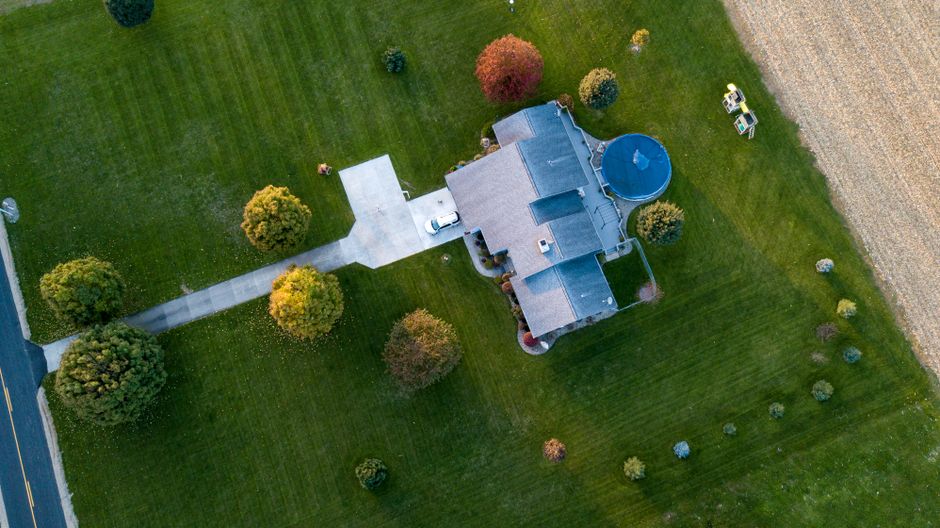
The short answer is that it depends on where the pool is and what kind of pool it is — and the state-level rule most people picture when they ask this question doesn't actually apply to most residential backyard pools at all. Getting this distinction right matters, because it's easy to misread "no state rule for residential pools" as "no rule at all," which isn't accurate either.
For code requirements that apply to fence installation across the Chippewa Valley more generally, see fence installation. For pool-specific fencing options, see pool fencing.
Wisconsin's only pool-fence rule is public-pool-only
Wisconsin's pool barrier requirement — a 5-foot fence or barrier around the pool area — is set out in ATCP 76.34(3). The chapter this rule sits within applies specifically to public pools and water attractions, with its scope confirmed by SPS 390.02, which governs the design and construction of public swimming pools and water attractions. "Public" in this context means pools operated for public or semi-public use — think a municipal pool, a hotel or campground pool, or a similar commercial or shared facility — not an ordinary residential backyard pool at a private home.
There is no state barrier rule for a residential backyard pool
This is the part that's easy to get wrong: because ATCP 76.34(3) exists and is sometimes summarized loosely as "Wisconsin's pool fence law," it's a natural assumption that the same 5-foot barrier requirement applies to a private backyard pool. It doesn't. No comparable state statute or administrative code section sets a barrier requirement for a residential pool. The state rule that does exist is scoped to public pools only, by its own chapter definition.
That doesn't mean a residential pool in the Chippewa Valley is free of any fencing requirement — it means the requirement, if one exists, comes from local zoning or municipal ordinance rather than from a state rule. Nothing specific to any of the six Chippewa Valley communities covered on this site has been confirmed as of this writing, which is exactly why the next section matters.
Check with your municipality directly
Because there's no statewide fallback rule to point to, whether a residential pool in Eau Claire, Chippewa Falls, Altoona, Menomonie, Lake Hallie, or Fall Creek needs a fence — and if so, what height and gate configuration — is a question for that municipality's zoning or building department, not something this page (or any general fence-industry resource) can answer definitively. A local ordinance could set its own barrier height, gate self-latching requirement, or setback from the pool edge, independent of anything at the state level.
This is also a case where confirming the requirement matters more than usual: a pool is a specific, elevated safety concern, and a homeowner who assumes "no state rule" means "no rule to worry about" could be missing a real local requirement.
Why the mix-up happens so often
Search results and general contractor marketing sometimes shorten "Wisconsin's pool barrier rule" to a blanket statement without mentioning that it's scoped to public pools, and it's an easy detail to drop in casual conversation. Because the rule is real, has a specific height figure, and is easy to find, it reads as more universal than it actually is. That's exactly the kind of gap where a homeowner can end up either assuming a requirement exists that doesn't apply to them, or — more importantly — assuming no requirement exists at all when a local ordinance actually does apply.
Above-ground vs. in-ground pools
Some municipal ordinances draw a distinction between above-ground and in-ground pools, sometimes exempting a smaller above-ground pool with a certain wall height (which itself can act as a partial barrier) from a fencing requirement that applies to an in-ground pool. Whether that kind of distinction exists in a given Chippewa Valley municipality's code is, again, a question for the local zoning department rather than something this page can generalize about.
Insurance considerations, separate from any code requirement
Independent of what any code or ordinance requires, a homeowner's insurance policy may address pool-related liability directly, and some insurers factor fencing, self-latching gates, or other barriers into how they underwrite a property with a pool. This is a private contractual matter between a homeowner and their insurer, not a legal requirement, but it's worth a conversation with an insurance agent alongside the municipal question — a pool can affect both at once, independently of each other.
What a pool fence generally needs to do, regardless of the specific rule
Even setting aside the exact height or configuration a given municipality might require, a fence intended to serve as a pool barrier generally needs a self-latching gate, no gaps or footholds a child could use to climb, and enough height to meaningfully deter unsupervised access — the same underlying safety goals the public-pool rule reflects, even though that specific rule doesn't apply here. See pool fencing for more on fencing designed with these goals in mind for a Chippewa Valley backyard pool.
For the broader set of code requirements that apply to fence installation across the Chippewa Valley, see fence installation.