Single vs. Double Drive Gates: Which One Fits Your Driveway?
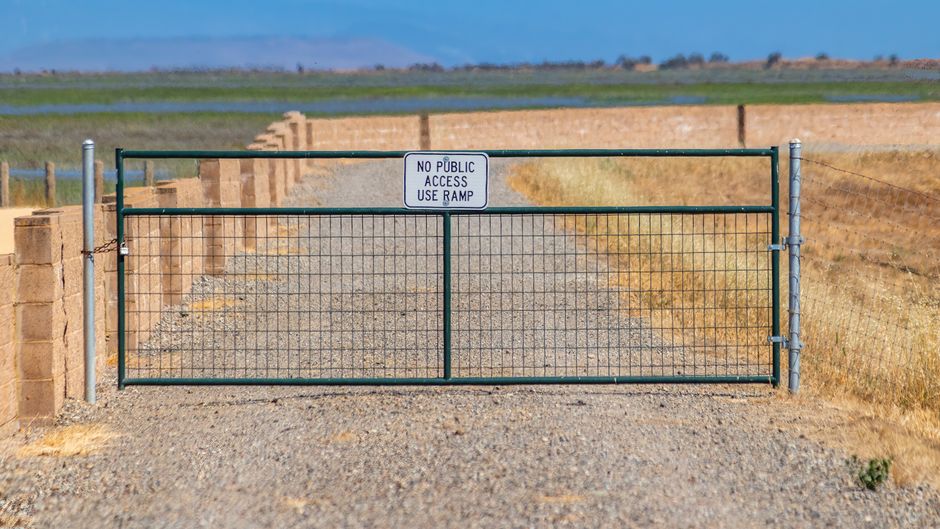
A drive gate has one job — controlling vehicle access into a driveway or yard — but the way it accomplishes that job splits into two fairly different approaches: a single wide panel, or two narrower panels meeting in the middle. Both are common on residential properties in the Chippewa Valley, and the right one depends more on the specific driveway than on style preference alone.
What separates a single gate from a double gate
A single drive gate is one continuous panel spanning the full opening, swinging (or sliding) as one unit. A double drive gate splits that same opening into two panels, each hinged on its own side post and meeting at a center point, either latched together or left to swing independently.
Width and clearance
Single gates work well for openings up to roughly 12-14 feet before the panel itself becomes unwieldy — a wide single panel is heavy, puts significant leverage strain on its hinge post, and needs real clearance behind it to swing fully open without dragging on the ground or catching on uneven terrain. Double gates split that same span across two lighter panels, each carrying less weight on its own hinge post and needing less swing clearance per side, which is why wider driveway openings are more commonly built as double gates rather than one oversized single panel.
Structural load on posts and hardware
Gate weight is carried entirely by the hinge post and the hinges themselves, and that load scales with panel size — a wide single-panel gate concentrates all of that weight and leverage onto one post on one side of the opening. Double gates distribute the same total opening width across two posts and two sets of hinges, which generally means less strain on any single post. This is one reason gate posts are typically set deeper and with a larger footing than standard line posts regardless of which configuration is chosen — the hinge post on any drive gate takes far more lateral stress than a fence post ever does.
Everyday use
A single gate opens or closes as one motion, which is simple but means the full swing arc needs to be clear of vehicles, landscaping, or slope on both sides. A double gate can be opened partially — just one leaf, for a pedestrian or a smaller vehicle — without swinging the full opening, which some homeowners find more convenient day to day. Double gates also typically use a drop rod or center latch to secure the two leaves together at the middle, adding a hardware step that a single gate doesn't need.
Appearance
A single wide gate reads as one uninterrupted panel, which some homeowners prefer for a cleaner look, especially on a fence style with a strong horizontal pattern. A double gate has a visible center seam where the two leaves meet, which can actually complement certain fence styles — for instance, a design with vertical pickets or a symmetrical layout, where a center division looks intentional rather than like a compromise.
Automation considerations
Both configurations can be automated, but double gates typically need two gate operators (one per leaf) rather than one, along with a way to coordinate their timing so both leaves open and close together. Single gates need only one operator, which simplifies the automation setup, though the operator itself has to be sized for the full weight of the wider single panel.
Site conditions that tip the decision
Beyond raw opening width, the physical site often settles the choice on its own. A sloped driveway can make a single wide panel difficult to swing cleanly, since the bottom edge needs enough clearance to clear the grade through its full arc — a double gate's shorter panels are often easier to fit to a slope without dragging. Nearby obstructions — a mailbox, a retaining wall, dense landscaping — can also limit how far a gate is able to swing open on one or both sides, which may rule out a single wide panel even on an opening that would otherwise support one. A sliding gate, rather than either hinged option, is sometimes the better fit where swing clearance is limited on both sides of the opening regardless of how the panel is divided.
Long-term wear differences
Because a single gate concentrates its full weight and swing motion on one hinge post, that post and its hinges tend to see more cumulative stress over years of daily use than either post on a double gate carrying the same total span. In practice, this often shows up first as a slight sag at the latch side of a single gate — the unsupported end furthest from the hinge — which is why adjustable hinges and periodic hinge checks matter more on a wide single panel than on a pair of shorter double-gate leaves. Neither configuration is inherently more failure-prone when built and sized correctly; the difference is mainly in where wear tends to concentrate and how noticeable it becomes over time.
Side-by-side summary
| Factor | Single gate | Double gate |
|---|---|---|
| Best for opening width | Narrower openings (up to roughly 12-14 ft) | Wider openings |
| Load per hinge post | All weight on one post | Split across two posts |
| Partial-opening convenience | No — opens as one unit | Yes — one leaf can open alone |
| Extra hardware | None beyond standard hinge/latch | Center drop rod or latch to join leaves |
| Automation | One operator | Typically two operators, coordinated |
Choosing between them
For a narrower driveway opening, a single gate is usually simpler and has fewer moving parts. For a wider opening, a double gate distributes weight better and offers the partial-opening convenience some households value. Either way, getting the hinge posts, footings, and hardware sized correctly for the actual gate weight matters more than the style choice itself — an undersized post or hinge will eventually sag or fail regardless of whether the gate is one panel or two. For more on gate options, hardware, and what's involved in adding or replacing a drive gate, see fence gates.