Gate Hardware and Latch Types Explained
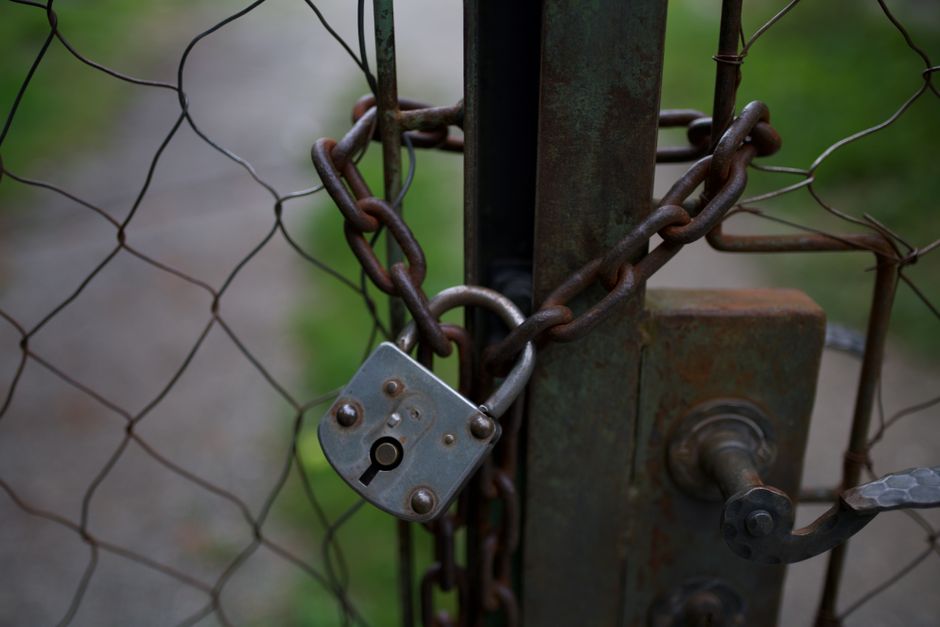
A gate is only as reliable as its hardware. The panel itself can be well-built and still sag, bind, or fail to stay closed if the hinges, latch, or supporting hardware weren't matched to the gate's weight and use. Understanding the main categories helps make sense of why a given gate is built the way it is.
Hinges
Hinges carry the full weight of the gate and take the most repeated stress of any hardware on the structure, since every open-close cycle loads and unloads them.
- Strap hinges run a long metal strap along the gate frame, spreading the load across more of the panel — common on heavier wood gates where a compact hinge would concentrate too much stress on a small area of the frame.
- Self-closing hinges use a spring or gravity mechanism to swing the gate shut automatically after it's opened, which is useful anywhere the gate needs to stay reliably closed — around a pool enclosure or a yard with pets, for instance — without relying on someone remembering to close it.
- Adjustable hinges allow the gate's hang to be fine-tuned after installation, correcting for a slight sag that develops over time as the gate settles or the post shifts seasonally.
Hinge size and count need to match the gate's actual weight — a heavy gate on undersized or too few hinges will eventually sag at the latch side, which is one of the most common gate complaints and almost always a hardware-sizing issue rather than a flaw in the panel itself.
Latches
Latches keep the gate closed once it's shut, and the right type depends mostly on who needs to open the gate and how.
- Gravity latches drop into place under their own weight when the gate closes and lift free with a simple upward motion — simple, reliable, and common on both pedestrian and drive gates.
- Thumb latches use a lever mechanism operable from one or both sides, often paired with a hole or opening in the gate so the lever can be reached from outside without unlocking anything.
- Slide bolts are a manually operated bar that slides into a catch, offering a simple secured-closed position without a full lock — often used alongside another latch as a supplementary hold.
- Keyed or padlock-ready latches add an actual locking mechanism, relevant where the gate needs to restrict access rather than just stay closed against wind or an animal nosing it open.
- Magnetic latches hold the gate closed with paired magnets rather than a mechanical catch, common on lighter pedestrian gates and self-closing pool-adjacent gates where a smooth, low-maintenance closure matters.
Drop rods and center latches (double gates)
Double gates need a way to join the two leaves at the center, in addition to whatever latch secures the gate to the receiving post. A drop rod is typically mounted to one leaf and drops into a sleeve set in the ground or a track, holding that leaf firmly in place so the other leaf's latch has something solid to catch against.
Post-mount hardware
Hinges and latches are only as strong as what they're bolted into. Gate posts carry more lateral load than standard line posts, since they're absorbing the full swinging weight of the gate at every open-close cycle, and hardware needs a solid, adequately reinforced post to anchor into — hardware bolted into an undersized or poorly set post will eventually work loose or pull free, regardless of hinge quality.
Material and corrosion resistance
Wisconsin's freeze-thaw cycles and road salt exposure near driveways make hardware corrosion resistance a real factor, not just a finish preference. Stainless steel, hot-dip galvanized steel, and powder-coated finishes all resist rust meaningfully better than plain or plated steel exposed to repeated wet-dry and freeze-thaw cycling. Hardware that rusts doesn't just look bad — a corroded hinge pin or latch spring can bind, stick, or fail outright well before the gate panel itself shows any wear.
Signs hardware needs attention
Hardware problems tend to show themselves before a gate fails outright, and catching them early is usually a small fix rather than a full hardware replacement:
- A gate that's harder to lift or swing than it used to be often points to a hinge pin drying out or beginning to corrode internally, even if it looks fine from the outside.
- A latch that no longer catches reliably, or needs to be slammed to engage, is frequently a sign the gate has sagged slightly and the latch and receiver are no longer meeting squarely — a hinge adjustment often fixes this without replacing the latch itself.
- Visible rust streaks below a hinge or latch mean moisture is getting into the hardware, which will accelerate corrosion from that point forward if left unaddressed.
- A gate that swings shut on its own when it shouldn't, or won't stay open, usually points to a post that's shifted out of plumb rather than a hardware defect.
Matching hardware to the gate's job
| Gate use | Hardware priorities |
|---|---|
| Everyday pedestrian gate | Smooth-operating hinges, simple gravity or thumb latch |
| Pool or child-safety gate | Self-closing hinges, latch positioned out of easy reach for small children |
| Drive gate (manual) | Heavy-duty strap hinges, drop rod if double-leaf, weather-resistant latch |
| Drive gate (automated) | Hinges and posts rated for powered operation, latch compatible with the operator's locking function |
Getting hardware sized right
Hardware selection isn't really a style decision on its own — it follows from the gate's weight, how often it's used, and what it needs to do (stay latched, self-close, lock, join with a second leaf). For gate styles, materials, and hardware options matched to a specific fence, see fence gates.