Are Automatic Gate Openers Worth It?
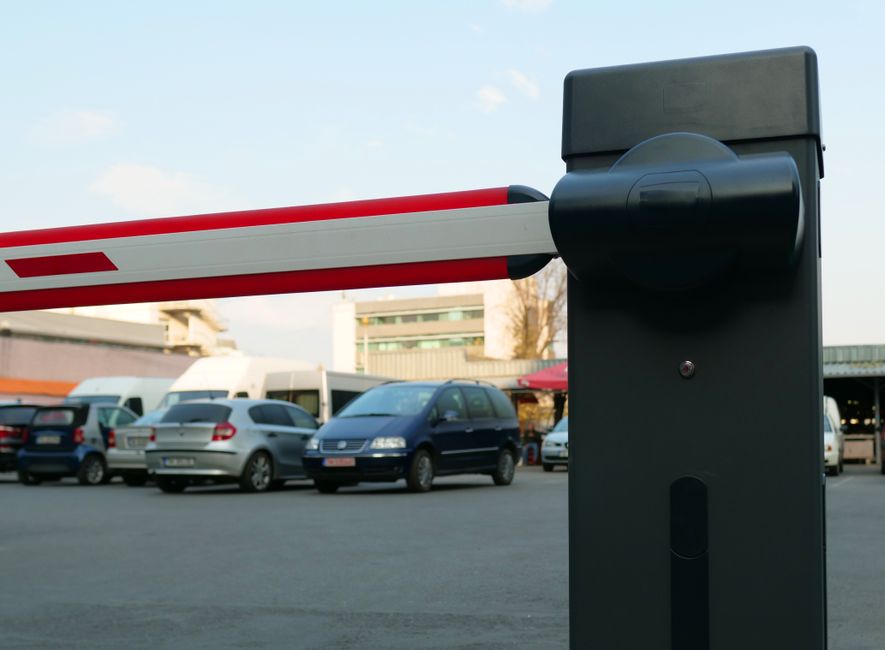
An automatic gate opener turns a manual swing or slide gate into a powered one, controlled by a remote, keypad, or sensor rather than someone getting out to open and close it by hand. Whether that upgrade is worth it depends less on how much homeowners like the idea of it and more on a handful of practical factors: how the gate is used day to day, what it costs to run and maintain the equipment over time, and what the site itself can support.
What an opener actually adds
The core benefit is straightforward: not having to get out of a vehicle to open and close a gate, especially in poor weather, when carrying groceries, or after dark. Beyond convenience, an automated gate that's kept reliably closed also adds a layer of access control that a manual gate left open out of convenience doesn't provide — a gate only controls access when it's actually closed, and automation makes closing it a non-event rather than an extra step people skip.
Types of gate operators
Operators are generally matched to the gate style they're driving:
- Swing gate operators mount to the gate post and push or pull the gate panel through its arc — either a linear actuator arm or an articulated arm, depending on the gate's swing radius and available mounting space.
- Slide gate operators use a drive wheel or chain to move a sliding gate horizontally along a track, and are common where a swinging gate's arc wouldn't have room to clear (a driveway with limited depth, for instance).
Both types need to be sized to the gate's actual weight and width — an undersized operator will strain, cycle slowly, or fail prematurely trying to move a gate heavier than it's rated for.
Power and site requirements
Gate operators need a power source, which on most residential properties means running electrical service out to the gate location — a real consideration if the gate sits far from the house or an existing power run. Solar-powered operators with a battery backup are a common workaround for gates in a remote spot on the property where trenching for power isn't practical, though they depend on adequate sun exposure to keep the battery charged, which is worth factoring in given how much shorter and lower-angle winter daylight is in Wisconsin.
Safety features to expect
Modern automatic gate operators are built around entrapment-protection standards that require the gate to detect an obstruction — a vehicle, a person, a pet — in its path and stop or reverse rather than continuing to close against it. That typically means at least one of: a photo-eye sensor across the opening, an edge sensor on the gate itself, or a monitored electric edge that cuts power on contact. These aren't optional extras; they're the baseline safety behavior any properly installed residential gate operator should have, and matching the right sensor setup to the specific gate and site is part of a correct installation.
Maintenance and winter considerations
An automated gate adds moving mechanical and electrical components that a manual gate doesn't have, and those components need periodic attention: chain or belt tension on slide operators, hinge and arm lubrication on swing operators, battery health on solar setups, and sensor alignment, which can shift over time or after a hard impact. Cold weather adds its own wear — hydraulic and mechanical operators can slow down or strain more in sub-zero temperatures, and any moisture that gets into housings or connections risks freezing. None of this is a reason to avoid automation, but it is a reason to expect an occasional service visit rather than treating the equipment as install-and-forget.
When automation tends to make the most sense
A few situations tip the value calculation clearly toward "worth it":
- A gate used multiple times a day, where getting out to open it manually adds up
- A property where keeping the gate reliably closed matters for pets, kids, or livestock
- A gate far enough from the house that walking out to it isn't convenient
- A shared or rental driveway where remote or keypad access control is useful for multiple users
For an occasional-use gate that's opened once in a while, a well-built manual gate with good hardware may simply be the more practical choice — automation solves a convenience and access-control problem, and it's worth it in proportion to how often that problem comes up.
Getting the gate and operator matched correctly
Automation works best when the gate itself — its weight, swing or slide path, and hardware — is built to handle the added stress of powered operation from the start, rather than retrofitted onto a gate that wasn't designed for it. For more on gate styles, hardware, and automation options, see fence gates.