Aluminum Fence Styles and Heights
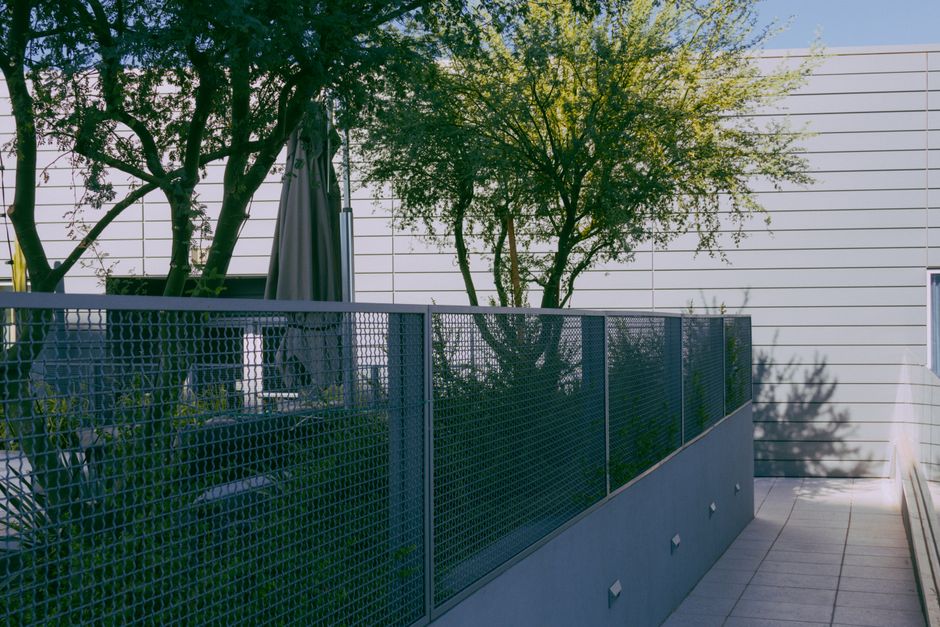
Aluminum ornamental fencing comes in a narrower range of styles than wood, but "narrower" still means real choices — rail-top profile, picket spacing, panel height, and finish color all combine into a fence that can look formal and traditional or clean and modern depending on which options get picked. Understanding the categories makes it easier to describe what's actually wanted rather than pointing at a photo and hoping.
Rail-top profiles
The top of an aluminum fence panel is where most of the style difference lives, since the vertical pickets themselves are usually a simple square or rectangular profile regardless of the overall design.
- Spear-top (or "spire-top") panels have pickets that rise above the top rail and end in a pointed finial, echoing traditional wrought-iron estate fencing. This is the most classic ornamental look and reads as more formal than the alternatives.
- Flat-top (or "smooth-top") panels have pickets that stop flush at the top rail, with no finial. This is a cleaner, more modern-looking profile, and it's also the more common choice for pool enclosures and dog runs, since there's nothing projecting upward to catch clothing or create a climbing foothold.
- Puppy-guard (or "3-rail") panels add a third horizontal rail low to the ground, closing the gap under the bottom rail that a standard 2-rail panel leaves open. This style exists specifically to keep small pets from squeezing under the fence, and it's a common request even outside of a dedicated pool or security project.
Picket spacing
Standard residential aluminum fencing commonly uses picket spacing in roughly the 3 to 4-inch range between pickets, which keeps the open, airy look that draws people to ornamental fencing over a solid privacy fence in the first place. A tighter "pool-style" or security spacing option — commonly under 2 inches between pickets — is also manufactured specifically for pool enclosures and situations where keeping small children or pets from passing between pickets matters more than an open sightline. The tighter the spacing, the more pickets a given panel length needs, which affects material cost and the finished look — a tight-spacing fence reads visually more like a solid screen from a distance than a standard-spacing fence does.
Height ranges
Residential aluminum fencing is manufactured in a handful of standard heights, most commonly in the 3-to-6-foot range, with 4 and 5 feet being especially common for a property-line or front-yard ornamental fence and 6 feet more common where more enclosure or privacy is wanted, such as around a pool or a portion of yard closer to the house. Taller commercial and security-grade aluminum fencing exists but isn't typical for a residential application.
Whatever height gets chosen for a specific property, it has to work within whatever the local municipality allows for that yard and district — height limits in the Chippewa Valley vary by town and by which yard the fence sits in (front, side, or rear), and those specifics apply to every fence material, not just aluminum.
Finish and color
Black is by far the most common finish for residential aluminum fencing, matching the traditional wrought-iron look it's often chosen to replicate, but bronze, white, and a handful of other factory powder-coat colors are typically available from most manufacturers as well. The powder-coat process bakes a durable pigmented finish onto the aluminum, which is part of why aluminum fencing holds its color and finish over time better than a fence that relies on paint alone.
Post size and panel thickness
Beyond the visible style choices, residential aluminum fence systems also vary in post size and picket wall thickness, which affects rigidity more than appearance. A typical residential-grade aluminum fence uses posts in roughly the 2-to-2.5-inch square range with pickets around 5/8 inch square, sized for a standard property-line or ornamental application. Commercial and security-grade aluminum fencing steps up to heavier post and picket dimensions for situations that call for more rigidity than a typical residential yard needs. Most residential projects don't need to think past the standard grade, but it's a real spec difference worth knowing if a fence needs to stand up to more than typical yard use.
Sloped or uneven yards add another practical wrinkle: most manufactured aluminum panels are built with a small amount of "racking" tolerance, letting a panel step down gradually along a slope rather than sitting level with a growing gap underneath. How much racking a given panel line allows is another spec that varies by manufacturer and matters more on a hilly Chippewa Valley lot than on a flat one.
Matching style to purpose
A spear-top, standard-spacing panel in black is the traditional choice for a front-yard or property-line fence meant to look decorative first and functional second. A flat-top, tighter-spacing panel is the more common pick for a pool enclosure or a section of yard where keeping something specific in or out — a pet, a toddler, a garden bed — matters more than the classic look. Puppy-guard panels split the difference, keeping most of the open ornamental look while closing the one gap that matters for a small dog. None of these choices are mutually exclusive with height — a 4-foot flat-top and a 6-foot flat-top are both standard configurations, just suited to different parts of a property.
For help matching a specific style, spacing, and height to a particular yard, see aluminum fence installation for what's available for a Chippewa Valley property.